13/06/2023
Breaking away from the traditional education paradigm, no longer confined to chalkboards and whiteboards, many countries are embracing AI in the form of immersive visual experiences.
In this context, instructors serve as facilitators and motivators, rather than information providers.
Benefits of AI in Education
Artificial Intelligence (AI) is reshaping the world and the functioning of many industries, including education. AI in education can be understood as enhancing the awareness of the community.
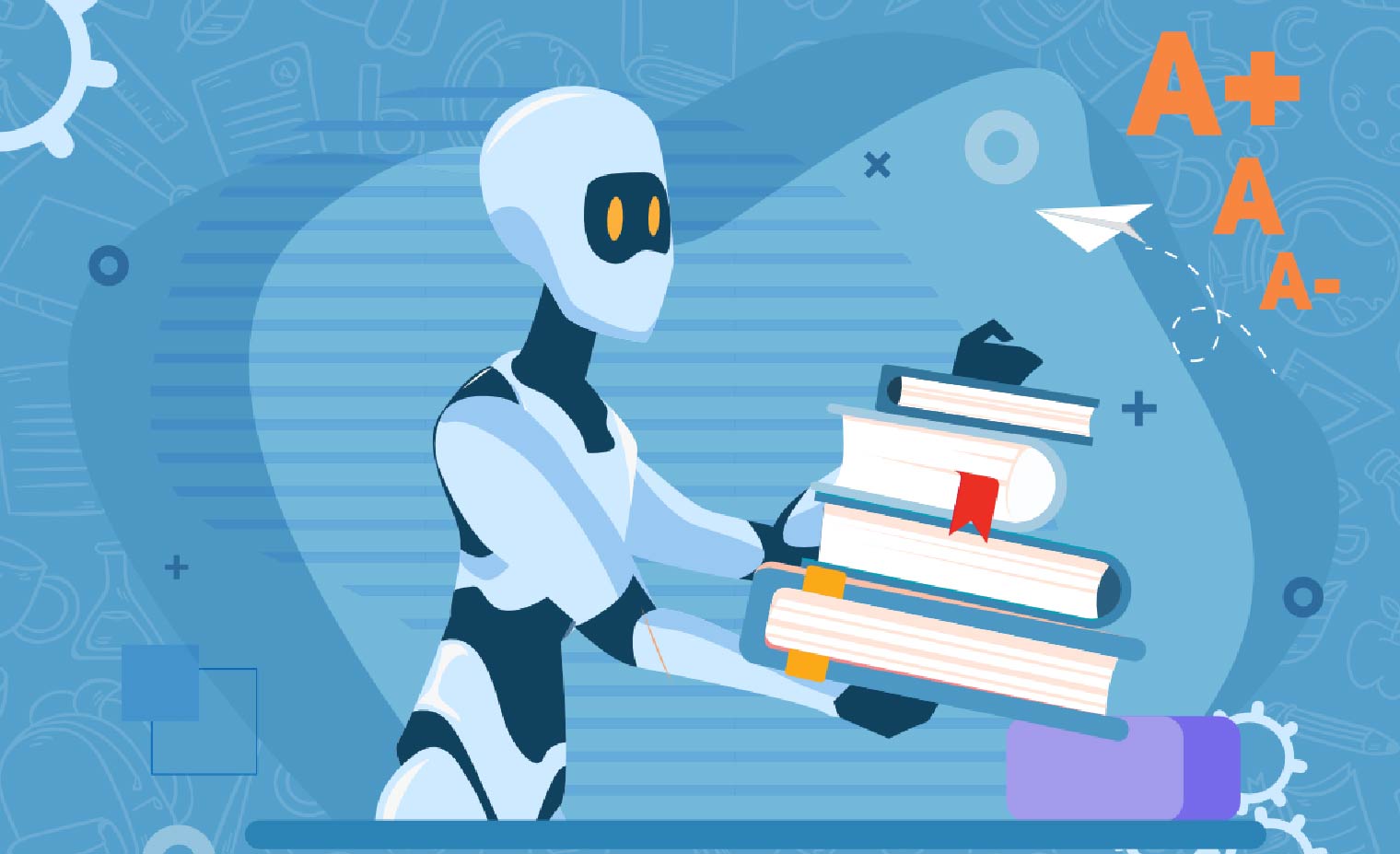
The South Korean Ministry of Education stated on June 8th that AI digital textbooks in schools are part of the government's digital education reform policy, aiming to provide diverse learning content through virtual reality technology (metaverse) and AI interactive technologies.
The use of AI digital textbooks is expected to create suitable learning opportunities for students at different levels of education.
Although some universities worldwide have implemented bans on the use of AI, such as Science Po in France, which prohibits the use of AI tools for learning purposes unless approved and supervised by teachers, or bans on GPT chat software at RV University in India and the University of Washington in the United States, it is undeniable that AI technology currently and in the future will become an essential part of human life.
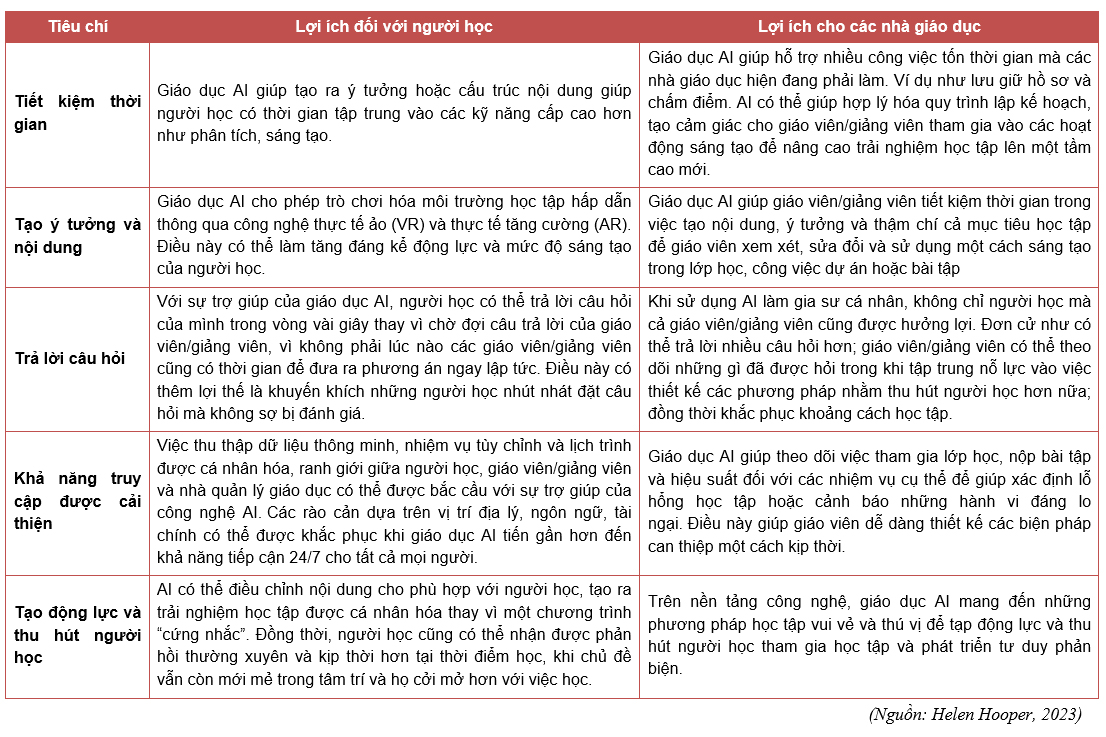
Currently, in the field of education, AI education brings many practical benefits to learners, teachers/instructors, and education administrators. Specifically, in addition to providing predictive and diagnostic solutions to alleviate learning difficulties, AI also gathers necessary information for teachers/instructors and learners, allowing personalized lesson planning and tailored assessments based on individual strengths and weaknesses.
Benefits of AI in Education
AI Education in the Era of Integration
In China, elementary and secondary school students in Jiangsu Province in Eastern China will have access to and learn about AI as a mandatory course, equivalent to mathematics and English. Besides China, South Korea has recently implemented AI education as a new subject in the high school curriculum since 2021.
The US Department of Education has expressed the perspective that "personalized learning will optimize the learning pace and instructional methods according to the needs of each learner. Meaningful and learner-centered learning activities are initiated by learners' interests and often self-initiated."
In personalized teaching, students utilize AI tools and applications to develop understanding of content and concepts. Teachers/instructors are responsible for designing project-based learning methods and creating various assessment tasks for students to demonstrate their knowledge, based on learners' preferences and abilities. Prior knowledge, interests, and skills of learners are taken into account in designing instructional units and content.
Regarding the issue of personalized learning, in Vietnam, the National Strategy on Research, Development, and Application of AI until 2030 was issued in early 2021. Promoting the development and implementation of AI applications in education is one of the assigned tasks. In addition to enhancing learners' awareness and personalized learning aspects, it aims to improve learning effectiveness with the assistance of teachers/instructors and virtual assistants.
"The best innovators will know how to use AI in a way that allows them to maintain their humanity" (John Spencer, 2022). Instead of banning AI in education, our country can guide students to develop responsible and ethical AI usage skills. Thus, AI can be utilized as a useful learning support tool, a reliable "companion" in education.
(*) Faculty of Law, School of Economics, Law and State Management, University of Economics Ho Chi Minh City (UEH)

Tax code: 0316911880
License No: 0316911880 ngày cấp 18/06/2021
 37 tôn Đức Thắng, Phường Bến Nghé, Quận 1, TP. HCM
 028 7108 5586


0789 903 890
 admin@thucnghiem.vn
0909 32 38 31
lienhe@thucnghiem.vn

Hotline
Hotline